
Blog
Understanding Rifle-Rated Helmets: Real-World Protection vs. Lab Standards
Products & Technology • Research & Development
•
Jan 20, 2026
Rifle-Rated for the Real World
When it comes to ballistic helmets, especially those marketed as “rifle-rated,” it’s important to recognize that not all are created equal. The differences lie not only in the materials and construction but especially in the standards and methods used to test and “qualify” these helmets for rifle protection.
Testing Standards
Ballistic performance is often discussed using standards published by the National Institute of Justice (NIJ). NIJ publishes test standards that define specific handgun threats, velocities, and performance criteria—commonly referred to as Level IIIA-type threats. For instance, a helmet with a IIIA rating is designed to stop pistol rounds (.44 mag, 9mm, 357 Sig).
Team Wendy’s RIFLETECH rifle-rated ballistic helmet stands out as it’s capable to move beyond the IIIA threat protection and protect against level III threats (such as 7.62 FMJ lead core).

Across the industry, the term “rifle-rated” is often used without sufficient detail. Some helmets are tested using lower-velocity rifle cartridges, reduced-load ammunition, or cartridges such as .300 Blackout. While these are technically rifle rounds, they operate at significantly lower velocities and energies than common law-enforcement or military rifle threats. By providing detailed caliber testing data, there is no misunderstanding of what we are classifying as a rifle caliber.
RIFLETECH is evaluated for resistance to penetration at muzzle velocity, which is the fastest speed a round leaves the weapon.
Why Muzzle Velocity Matters
Some manufacturers claim rifle ratings but only test their helmets at lower velocities, often specifying a speed that is less than muzzle velocity. This means that while the helmet might stop a round under certain conditions, it requires the shooter to be at a distance where the bullet’s velocity has decreased. In extreme terms, almost any helmet could be called “rifle-rated” if the bullet is slow enough due to distance.

Team Wendy’s approach is different: the RIFLETECH helmet is rated to stop rifle rounds at muzzle velocity, reflecting the realities of close-quarters encounters. This distinction is crucial because real-world altercations occur much closer than the distances required to slow down a bullet. Statistics from the FBI’s Law Enforcement Officers Killed and Assaulted (LEOKA) Program highlight this point: between 2005 and 2014, 62.2% of officers killed by firearms were shot from 0 to 10 feet away. Offenders don’t wait for law enforcement to create distance before firing—meaning that the velocity of rounds in the field closely matches muzzle velocity.
RIFLETECH’s Real-World Ballistic Performance
Team Wendy’s RIFLETECH helmet has been tested to defeat threats at muzzle velocity, offering protection in scenarios that most accurately reflect law enforcement and military operations. Its tested capabilities include:
- NIJ RF1 (STD 0123.00) and NIJ Level III (STD 0108.01), tested according to NIJ STD 0106.01
- Resistance to penetration at muzzle velocity
- 7.62x39 MSC
- 7.62x51 FMJ (M80 Ball NATO round)
- 5.56 M193 BT
- 9mm FMJ RN Conclusion
- Fragment Performance: 17gr FSP V50 ≥ 4430 fps (1350 m/s)
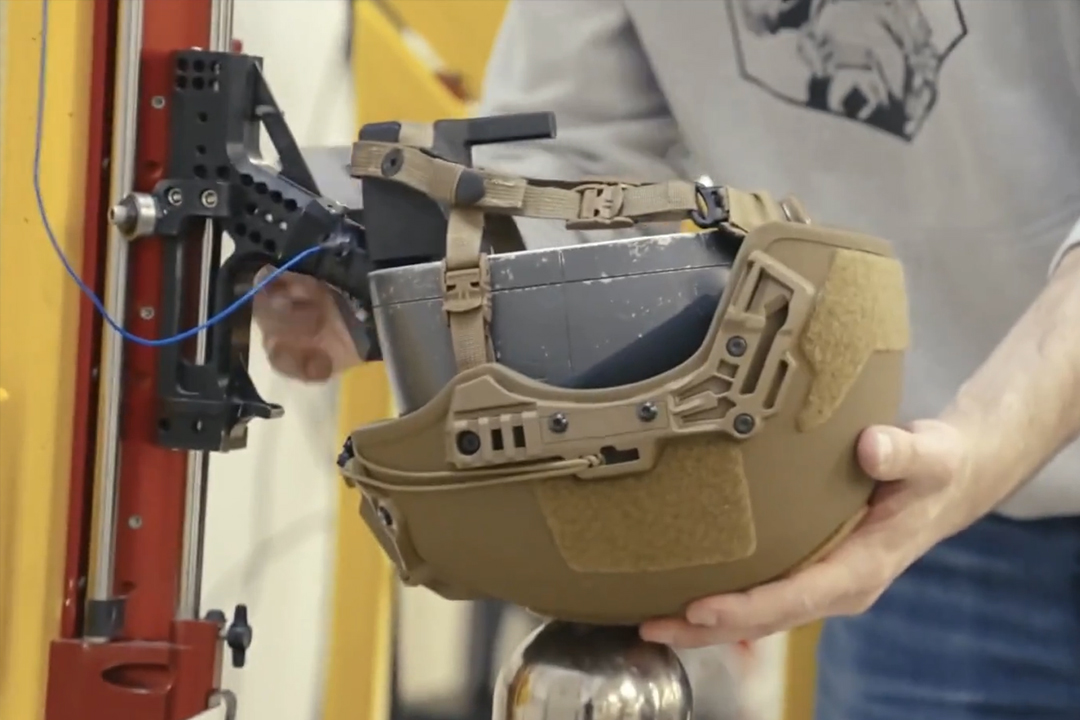
V50 testing provides valuable comparative insight into a helmet’s resistance to penetration and its overall material capability. For reference an Aramid helmet IIIA helmet has a V50 performance of 650 m/s. Our RIFLETECH helmet that is made from Ultra-high molecular weight polyethylene material features a V50 performance of 1350 m/s. This is > 100% increase in 17 gr. V50 performance highlights the maximum lifesaving potential of this helmet.
Team Wendy’s RIFLETECH is engineered and tested to provide real-world protection where it matters most—at the distances where threats actually occur. Understanding these standards and distinctions can make a critical difference in choosing the right ballistic helmet for your needs.

Related
-

Traumatic Brain Injury • Products & Technology • Research & Development
•
Mar 18, 2026
Why Blast‑Related Traumatic Brain Injury Is So Hard to Understand
-

Research & Development
•
Mar 6, 2026
Understanding Blast to Better Protect the Brain
-
Products & Technology
•
Mar 3, 2026
Maintaining Maximum Protection: Why Combat Helmet Liners & Retention Systems Must Be Replaced
-
Research & Development
•
Oct 30, 2025
Team Wendy Unveils Groundbreaking Helmet Safety Findings at PASS Symposium
-
Research & Development
•
Oct 23, 2025
Protecting Firefighters from TBI in Search and Rescue
-
Products & Technology • Research & Development
•
Aug 18, 2025
Twelve Meters and the Truth: What We Saw at the RIFLETECH™ Shoot
-
Products & Technology • Research & Development
•
Aug 11, 2025
Why We Use the NOCSAE Head Form
-
Search & Rescue • Products & Technology
•
Aug 11, 2025
Choosing the right helmet for search & rescue
-
Research & Development
•
Jul 9, 2025
Evolving Standards in Ballistic Helmet Evaluation
-

Products & Technology
•
Jun 11, 2025
Tips for Maintaining Your Team Wendy SAR Helmet
-
Research & Development
•
Mar 17, 2025
Monitoring Head Impacts With a Smart Headband
-
Products & Technology
•
Dec 17, 2024
Team Wendy Epic Specialist Helmet