



Blog
How to Choose the Best Bump Helmet: Fit, Features, and Performance Guide
Products & Technology • Applications & Use Cases • Research & Development • Bump helmets
•
Sep 15, 2026
Bump helmets are built for users who face head injury risk from impacts, falls, vehicle movement, confined-space strikes, breaching and training hazards, maritime operations, or rescue environments. Their purpose is to help manage blunt-force impact hazards while providing a stable platform for helmet-mounted PPE and accessories, such as headlamps, task lights, night vision goggles, visors, communications headsets, hearing protection and goggles.

In those environments, helmet performance depends on the full system: the shell, liner, retention, fit, ventilation, and accessory integration all working together. A well-designed rescue helmet should support mobility, comfort, and situational awareness while staying secure during movement, long wear, and changing mission conditions.
This guide follows the same practical, operator-focused logic used in our ballistic helmet guide, adapted for the realities of non-ballistic helmets. Instead of ballistic ratings and fragmentation metrics, the emphasis here is on blunt impact standards, energy attenuation (how a helmet manages the energy from an impact), retention stability, accessory integration, and mission fit. The goal is simple: to help you choose a helmet that protects well, fits correctly, and supports the way you actually work.
In this guide:
- Blunt-impact protection and relevant helmet standards
- How to evaluate performance claims, force management, and testing context
- Shell materials, liner architecture, and energy absorption
- Retention, fit, stability, and long-term system maintenance
- Accessory integration, mounting interfaces, and load management
- Mission-specific selection for rescue, maritime, military training, and law enforcement training, and tactical support roles
- Design maturity, system-level performance, and a final selection framework
Impact Protection and Standards
Before you look at accessory mounting, comfort features, and retention options, the most important question you should ask about a bump helmet is whether it has been designed and tested to manage the types of impact energy your environment is likely to produce.
Impact types vary by mission. A maritime operator may strike a rigid surface during vessel movement. A search-and-rescue technician may fall or swing into rock, structure, or equipment. A law enforcement user in training may hit the interior of a vehicle, doorway, breaching point, or concrete surface. A helmet that performs well only in one narrow test condition may not be the best choice if your real-world risk includes multiple directions of impact, environmental exposure, or repeated use.

That is why leading bump helmets are often evaluated against more than one standard. Each standard tells you something slightly different about the kind of protection the helmet was designed to provide.
Why it matters: standards help you compare helmets utilizing something more meaningful than marketing language. A helmet built for only basic top-impact scenarios may not be the right choice for rescue, climbing, or tactical movement where side, rear, and off-axis impacts are credible hazards.
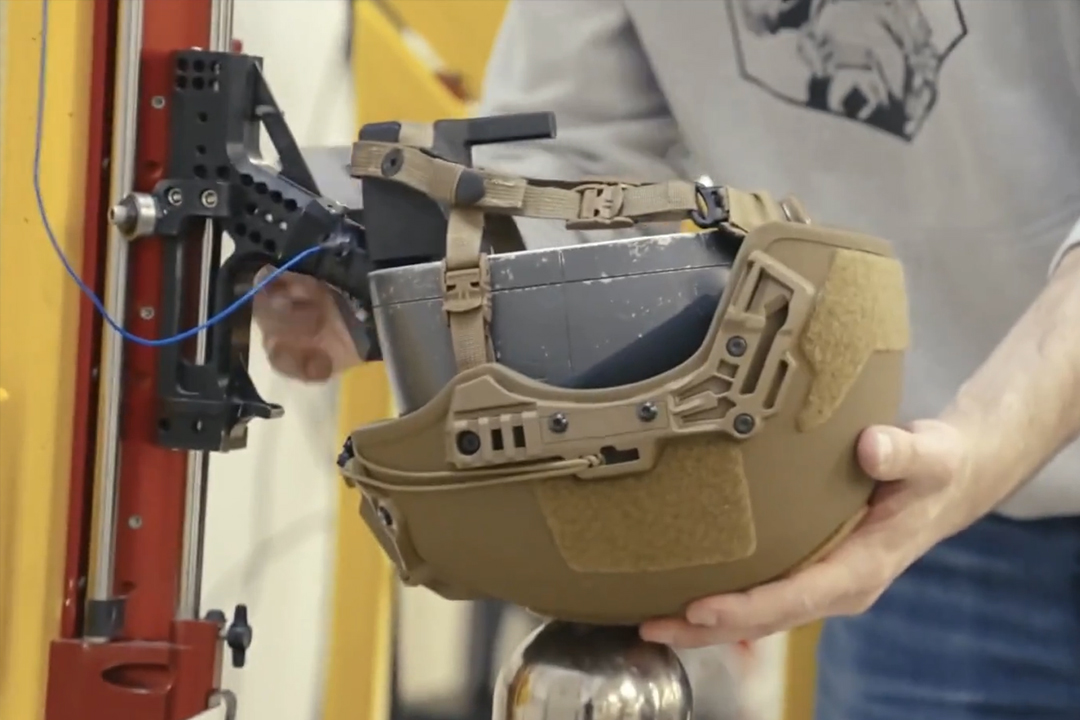
Team Wendy also evaluates helmet performance through its advanced, biofidelic test rig called DREW (Dummy for Rotational Evaluation of Wearables). DREW helps Team Wendy engineers study how helmet systems behave during impacts that can create rotational motion, adding another layer of insight beyond traditional linear impact measurements. By looking at how the complete helmet system responds to these complex loading conditions, Team Wendy can better understand fit, stability, liner performance, and energy management in scenarios that more closely reflect real-world head movement.

Dummy for Rotational Evaluation of Wearables (DREW)
One nuance is worth emphasizing: not every standard measures the same thing in the same way, and a longer standards list does not automatically make one helmet universally better than another. A lighter tactical bump helmet may be the right choice when accessory integration and reduced neck load are higher priorities than uni-directional industrial-style impact coverage. Conversely, a SAR user may be better served by a helmet that carries mountaineering and rescue-relevant certifications even if it weighs slightly more.
The smart approach is to treat standards as mission clues. Ask what kind of scenarios the standard was built around, then compare that with the hazards you are actually trying to mitigate.
Impact Protection: Mitigating Traumatic Brain Injury (TBI)
For bump helmets, impact protection is the primary function, making their role in mitigating traumatic brain injury (TBI) especially critical. These helmets are designed to absorb and manage blunt force energy from falls, collisions, and debris strikes. Such impacts can transmit significant force to the head, potentially resulting in concussions or more severe brain trauma.
Modern bump helmets rely on advanced liner systems to reduce this risk. Multi-density foam technologies are engineered to absorb, disperse, and slow down impact energy before it reaches the skull. Technologies such as Team Wendy’s ZORBIUM® foam and advanced liner systems like the RECON™ AIR FIT, are specifically designed to manage these forces, reducing peak acceleration while maintaining comfort. These liners typically incorporate strategically placed, multi-density pads that cushion the head, improve stability, and support extended wear without creating pressure points.


To validate this performance, bump helmets are tested against rigorous blunt impact standards such as the U.S. Army’s ACH blunt impact requirements and international protocols like AEP 2902. These tests simulate real-world scenarios—including falls, lateral impacts, and dynamic loading conditions—to ensure helmets can effectively reduce peak head acceleration.
When evaluating a bump helmet, the key is not just meeting these standards, but exceeding them where possible. Lower transmitted forces translate directly to reduced injury risk. In environments where blunt impact hazards are the primary threat, this level of performance is not just beneficial—it is essential to maintaining operator safety and long-term effectiveness.
Understanding the Key Performance Metrics
When evaluating helmet performance, the most useful performance question is how well the helmet manages impact energy before it reaches the head. That means looking at measured force or acceleration during testing, the conditions used in those tests, and how closely those conditions reflect the hazards the helmet may face in the field.
In blunt-impact protocols, lower transmitted acceleration is better. A helmet that keeps peak acceleration well below the allowable limit provides more safety margin than one that merely passes. That extra margin matters because real incidents are messy: impacts may involve awkward angles, uneven surfaces, accessory loads, wet conditions, fatigue, or imperfect fit.
For example, Team Wendy’s advanced bump helmets, such as the EXFIL® Carbon and RECON™ Tactical, average well below the legacy 150g ACH blunt-impact threshold in relevant testing. That result points to meaningful head-impact mitigation, not just basic compliance.
What to look for when evaluating a claim
- The actual standard or protocol referenced, not just “tested” or “independently evaluated.”
- Whether the manufacturer says the helmet meets the requirement or exceeds it.
- Whether testing applies to crown-only impact or includes side, front, rear, or off-crown conditions.
- Whether the performance claim refers to the complete helmet system, including shell, liner, and retention—not just one component.

It is also helpful to separate impact attenuation from injury prevention language. A helmet can reduce the likelihood or severity of traumatic brain injury, but no helmet can eliminate that risk entirely. The most accurate claims focus on force management, testing thresholds, and system design rather than implying a bump helmet can make the wearer concussion-proof.
Why it matters: a buyer who understands the difference between meeting a standard and meaningfully outperforming it is less likely to choose a helmet based on superficial specs alone.
Shell Construction, Liner Design, and Materials
A bump helmet works as a system. The shell resists the initial blow. The impact liner absorbs and manages energy. Comfort pads stabilize the fit and help maintain the right stand-off between shell and head. The retention system keeps everything in position when the impact occurs. If one element is weak, the whole system suffers.
Most modern tactical bump helmets use polymer or composite shells. Across Team Wendy’s current portfolio, materials vary by model and include polycarbonate copolymer, carbon fiber shell construction, and hybrid designs with carbon-reinforced crown structures.
Those material choices reflect a common trade-off: polymer shells often prioritize durability, consistency, and cost efficiency, while carbon or hybrid constructions are used when designers want to reduce weight or reinforce specific areas without giving up structural performance.

Inside the shell, liner architecture is as important as shell material. Search-and-rescue products, such as the SAR Tactical™, use an expanded polystyrene (EPS) impact liner with ZORBIUM® comfort pads, while newer platforms such as RECON™ Tactical combine multiple materials and pad geometries to manage impact, fit, airflow, and comfort.
Why liner architecture matters
- Impact layer: absorbs and spreads energy from larger impacts.
- Comfort layer: keeps the helmet stable, reduces pressure points, and allows fit customization.
- Airflow features: reduce heat buildup and improve tolerance during long wear.
- Pad modularity: allows the user to tune fit around head shape, eyewear, hearing protection, and communications.
- Specialty materials: add functionality for specific mission types, like encased liners for maritime operations that do not absorb water and are easier to clean.
Team Wendy’s approach to helmet design reflects a long-standing commitment to mitigating traumatic brain injury through rigorous research, development, and testing. Decades of work in impact biomechanics and material science have informed the development of advanced energy-absorbing technologies, including proprietary foam systems engineered to reduce peak head acceleration. This research-driven approach extends beyond individual components—focusing on how the complete helmet system manages energy transfer during real-world impacts to improve overall protective performance.
Why it matters: two helmets can look similar from the outside but behave very differently in real use. A well-designed interior can improve energy absorption, fit, thermal comfort, and long-duration wearability all at once.
Retention, Fit, and Stability
If the liner is the impact-management core of the helmet, the retention system is what makes that protection usable. A helmet that shifts, lifts, rotates, or comes off during dynamic movement is not delivering its intended protection, no matter how effective the shell and liner may be.
Modern bump helmets used for tactical, rescue, and training roles generally rely on four-point retention. This is a major improvement over older, simpler chinstrap arrangements because it gives the user better controlled stability under running, climbing, vehicle movement, fast-roping, and fall-related motions. In Team Wendy’s product lineup, CAM FIT® retention systems with BOA® dial adjustment are a consistent theme across tactical and rescue products, with some models offering a chin cup and others a sport-style under-chin strap depending on mission requirements.

A personalized helmet fit is important because helmet loadouts can change mission to mission and conditions can evolve minute to minute. The ability to quickly micro-adjust fit with the BOA® dial or make easy one-handed adjustments with the CAM FIT® locks can make the difference between a helmet that feels stable for ten minutes and one that remains stable for a ten-hour operation.
Why it matters: the best retention system is not simply the strongest one. It is the one that lets the user achieve repeatable, comfortable, secure stability with the actual accessories and other PPE used on the mission.
Fit checklist
- The helmet should sit level on the head, not tipped back or riding high in front.
- The shell should move with the head rather than lagging behind during quick motion.
- The chinstrap should be snug enough to prevent roll-off without creating hot spots or choking pressure.
- Pads should remain comfortable while wearing them for long durations and not have visible cuts, gouges, or other damage.
- The helmet should remain stable with mounted accessories, eye protection, and hearing protection in place.
Liners and retention systems also have a lifecycle. Replacement guidance stresses that liners and retention systems must be inspected and replaced as they wear, because stretched webbing, worn buckles, flattened pads, or degraded hook-and-loop interfaces can compromise protection and stability. This is as relevant to bump helmets as it is to ballistic systems: comfort wear and stability loss often happen gradually, which is why users may not notice the decline until performance is already compromised.
In practical buying terms, a helmet with an excellent shell and a mediocre fit is not a premium solution. Fit is performance.
Accessory Integration and Load Management
For many users, the bump helmet is as much a platform for mounting accessories as it is a protective device. That is especially true in law enforcement training, military support roles, maritime operations, and rescue environments where the helmet may support comms, night vision, lights, cameras, hearing protection, goggles, identification markings, or face and eye protection.
The foundational interfaces are typically the front shroud and side rails. These components are designed to support secure mounting of night vision devices (NVGs) and a wide range of accessories. Front shrouds are often reinforced—using materials like machined aluminum—to withstand the weight and dynamic forces associated with mounted devices, while side rail systems are engineered for broad compatibility with lights, communication headsets, cameras, and other mission-essential equipment. Rescue-oriented helmet platforms similarly prioritize robust accessory integration while maintaining compliance with relevant safety and impact standards.

Common integration priorities
- Night vision and thermal mounting through a stable front shroud interface
- Headset and hearing-protection compatibility via side railsTask lighting and camera attachment for low-light work or documentation
- Face shield or visor compatibility for debris, rotor wash, weather, or riot-style hazards
- External loop panels and cable management for identifiers, strobes, counterweights, and routing
Why it matters: a helmet that cleanly supports your full mission load is easier to trust in the field and helps users stay focused on the task at hand. If a helmet fights your accessories, it may be worn too loosely, configured poorly, or become a distraction because of fit and comfort issues.
Matching the Helmet to Your Mission
The best bump helmet is not the one with the longest spec sheet. It is the one whose protection profile, weight, retention system, and integration features line up with your actual operational reality. Mission fit should drive the choice.
Below is a practical way to think about common use cases using mission-first logic.
A few patterns stand out. Tactical users who care most about communications, night vision, and long wear usually gravitate toward lightweight high-cut platforms such as EXFIL® LTP or EXFIL® Carbon. Search and rescue users, by contrast, often need a broader standards story and stronger emphasis on off-crown and fall-related impact scenarios, which is where SAR Tactical™ or RECON™ Tactical become especially relevant. The latter is also notable for combining tactical interfaces with a broad range of blunt-impact standards in a single purpose-built bump platform.
There is also a weight-versus-capability balance to manage. Carbon and hybrid designs may save ounces or reinforce key areas, but the right answer is not always the lightest shell on paper. If your environment is harsher, wetter, or more rescue-oriented, you may accept slightly more weight in exchange for broader certification coverage, better face-protection compatibility, or a retention style more appropriate to fall hazards.
Why it matters: helmets are not selected in a vacuum. They are selected in the context of credible hazards, accessory load, duration of wear, and all the other equipment that has to coexist with the helmet.
Design Maturity and System-Level Performance
Team Wendy’s approach to bump helmet development places strong emphasis on traumatic brain injury mitigation, pad design, and system-level helmet performance. That emphasis is not just brand storytelling; it reflects a meaningful truth about modern helmet selection: the most important improvements are often invisible. They show up in liner tuning, retention refinement, shell geometry, airflow management, and the ability of the helmet to remain stable under real-world accessory loads.
Ongoing development in this category also reflects growing understanding of rotational and off-axis impact, military blunt-impact evaluation, mounting architecture, and comfort systems. Newer helmets, such as RECON™ Tactical, illustrate that direction particularly well: they are presented as integrated systems designed around specific end-user feedback and diverse mission demands.
For buyers, the practical lesson is to value maturity of design. Look for manufacturers that can clearly explain the liner system, the retention design, the standards met, the materials used, and the intended mission space for each model. Better documentation usually reflects better engineering discipline.

Bringing It All Together
Choosing the right bump helmet comes down to matching protection, stability, accessory integration, and comfort to the mission. Start with the hazards you’re likely to face, confirm the standards that apply, and evaluate the helmet as a complete system—not just a shell or feature list.
The best choice is the helmet that fits the user, loadout, and work ahead. When those elements align, a bump helmet helps reduce fatigue, support critical equipment, and provide dependable head protection where it matters most.
Related
-
Products & Technology • Helmet Saves
•
Aug 12, 2026
When Protection Matters Most: How a Team Wendy Helmet Helps Save Lives
-
Helmet Saves • Products & Technology
•
Aug 11, 2026
A Routine Shift That Became One of Our Toughest Calls
-
Traumatic Brain Injury • Products & Technology • Research & Development
•
Mar 18, 2026
Why Blast‑Related Traumatic Brain Injury Is So Hard to Understand
-

Research & Development
•
Mar 6, 2026
Understanding Blast to Better Protect the Brain
-

Products & Technology
•
Mar 3, 2026
Maintaining Maximum Protection: Why Combat Helmet Liners & Retention Systems Must Be Replaced
-

Ballistic helmets • Products & Technology • Applications & Use Cases • Research & Development
•
Feb 6, 2026
Ballistic Helmet Guide: How to Choose the Right Helmet
-
Products & Technology • Research & Development
•
Jan 20, 2026
Understanding Rifle-Rated Helmets: Real-World Protection vs. Lab Standards
-

Research & Development
•
Oct 30, 2025
Team Wendy Unveils Groundbreaking Helmet Safety Findings at PASS Symposium
-

Research & Development
•
Oct 23, 2025
Protecting Firefighters from TBI in Search and Rescue
-
Products & Technology • Research & Development
•
Aug 18, 2025
Twelve Meters and the Truth: What We Saw at the RIFLETECH™ Shoot
-
Products & Technology • Research & Development
•
Aug 11, 2025
Why We Use the NOCSAE Head Form
-
Search & Rescue • Products & Technology
•
Aug 11, 2025
Choosing the right helmet for search & rescue